Validation of Water Treatment Systems for Faster Implementation of Water Reuse in Germany
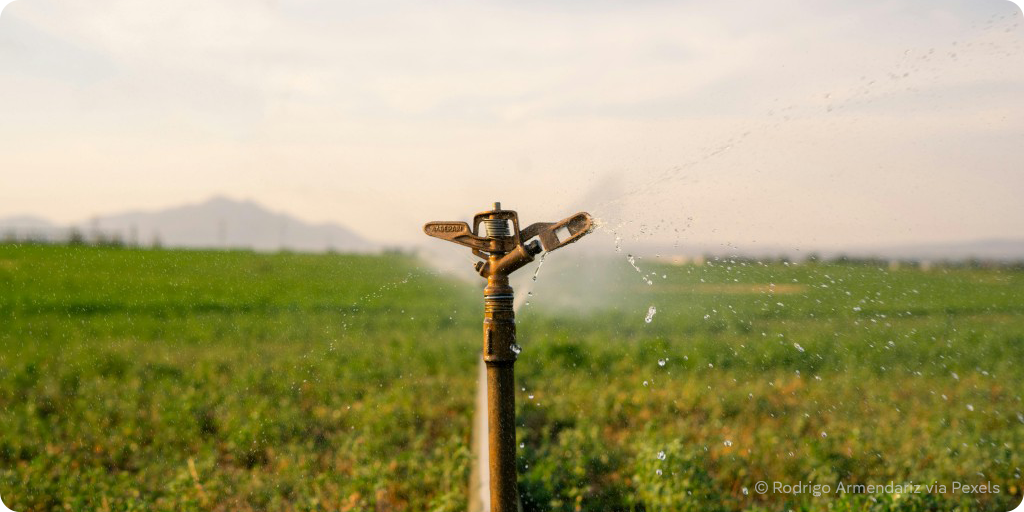
How can water reuse be made safer, more economical and easier to implement into praxis?
In regions where water is a limited resource, such as the Mediterranean, water reuse is an established practice. Wastewater that has been intensely treated and disinfected finds use as a valuable and sustainable resource in agriculture and thus constitutes an essential component of integrated water management. With increasing dry periods even in regions that have hitherto been considered abundant in water, the topic is now gaining importance in Germany and at EU-level. Here, too, water reuse can help save valuable resources in agricultural production or urban irrigation and secure long-term water availability.
To be used in agricultural production, treated water needs to adhere to minimum health and hygiene requirements as set by the EU regulation (EU) 2020/741, in effect since 2023. Bacteria, viruses, and protozoa must be verifiably removed during the cleaning process in accordance with specified standards. What is not yet clear, however, is how such a process can be effectively and uniformly verified.
Towards faster implementation of sustainable resources through standardized process validation
In Germany the EU regulation will be implemented by the German Environment Agency (Umwelt Bundesamt), with technical standards set by the German Association for Water, Wastewater and Waste (DWA). In addition to the minimum hygiene standards set by the EU, the current technical guideline DWA-M 1200 recommends the delineation of reference plants. Treatment plants with specific process chains can then be extensively validated once and serve as a reference for similar plants. Operators will be able to refer to these plants in future applications for validation, making these processes faster and easier.
Based on these guidelines, ValidReuse will develop and test:
Methods of validating treatment efficiency that are quantifiable and close to praxis, particularly by systematically comparing spiking and enrichment processes including relevant methods of statistical evaluation,
A proposition for a possible reference plant register, which could allow extensively validated treatment plants to be used as a reference in simplified additional validation processes, as well as
Praxis-oriented and standardized protocols for extensive and simplified validation processes, including estimates of costs and resources. This are intended to provide treatment operators and authorities with planning certainty and accelerate the implementation of water reuse in Germany.
KWB is the coordinator for the collaborative project and will supervise the case study at the Bad Oeynhausen treatment plant.
The project will develop methods and practical recommendations that are intended to simplify future planning and permitting processes. These will contribute to the ongoing revision of the DWA-M 1200 guideline and help implement the EU regulation (EU) 2020/741 on a national level.
Project lead: Ulf Miehe, Michael Stapf
Team members: Wolfgang Seis, Hannah Schubach